The Father
A naturalistic tragedy written in 1887. It explores the struggle between parents over the future of their child; resulting in the mother using her cunning manipulative skills to subdue and finally destroy the father.
Actor since 2016 • MA Theatre • Natyashastra Teacher • Trained Kathak Artist
Theatre is a discipline of deep devotion. Throughout my journey, I have had the profound honor of honing my craft under the guidance of visionary directors who shaped my understanding of the stage.
A naturalistic tragedy written in 1887. It explores the struggle between parents over the future of their child; resulting in the mother using her cunning manipulative skills to subdue and finally destroy the father.
A powerful Marathi play that explores the failures of idealism and the deep-rooted caste divide in Indian society, centering on an inter-caste marriage that exposes the harsh realities behind progressive social experiments.
A poignant drama exploring the complexities of modern relationships and the emotional distances that grow between married couples following sudden life crises.
A story of the 1947 Partition. A Muslim family migrating from Lucknow is allotted a haveli in Lahore, discovering an old Hindu woman still living there, leading to a clash between religious fanaticism and deep human compassion.
A classic focusing on the terrible situation of the elderly, reflecting the pain when children disown them, yet ultimately leading to a positive solution for a brighter tomorrow.
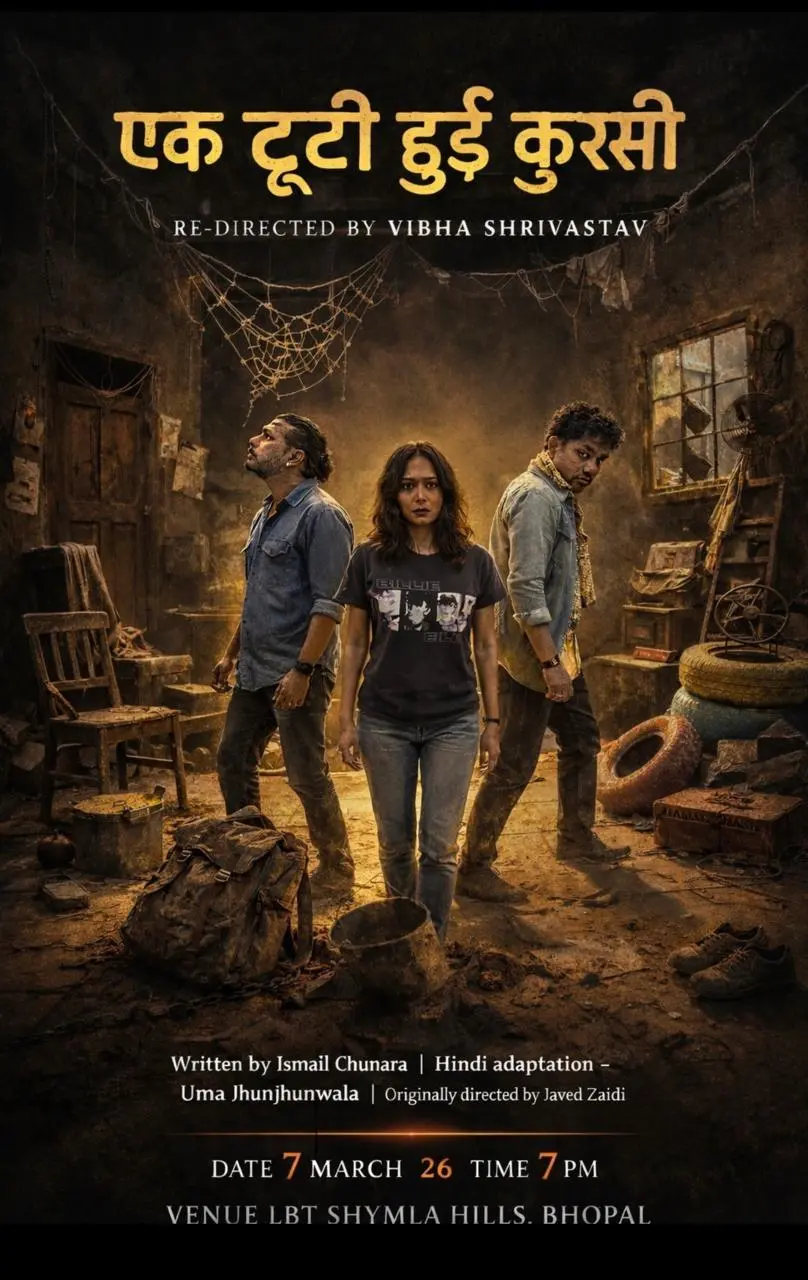
A symbolic play exploring existential themes, emotional attachments, and political satire, where three friends reunite to find a damaged chair, sparking a symbolic dispute.
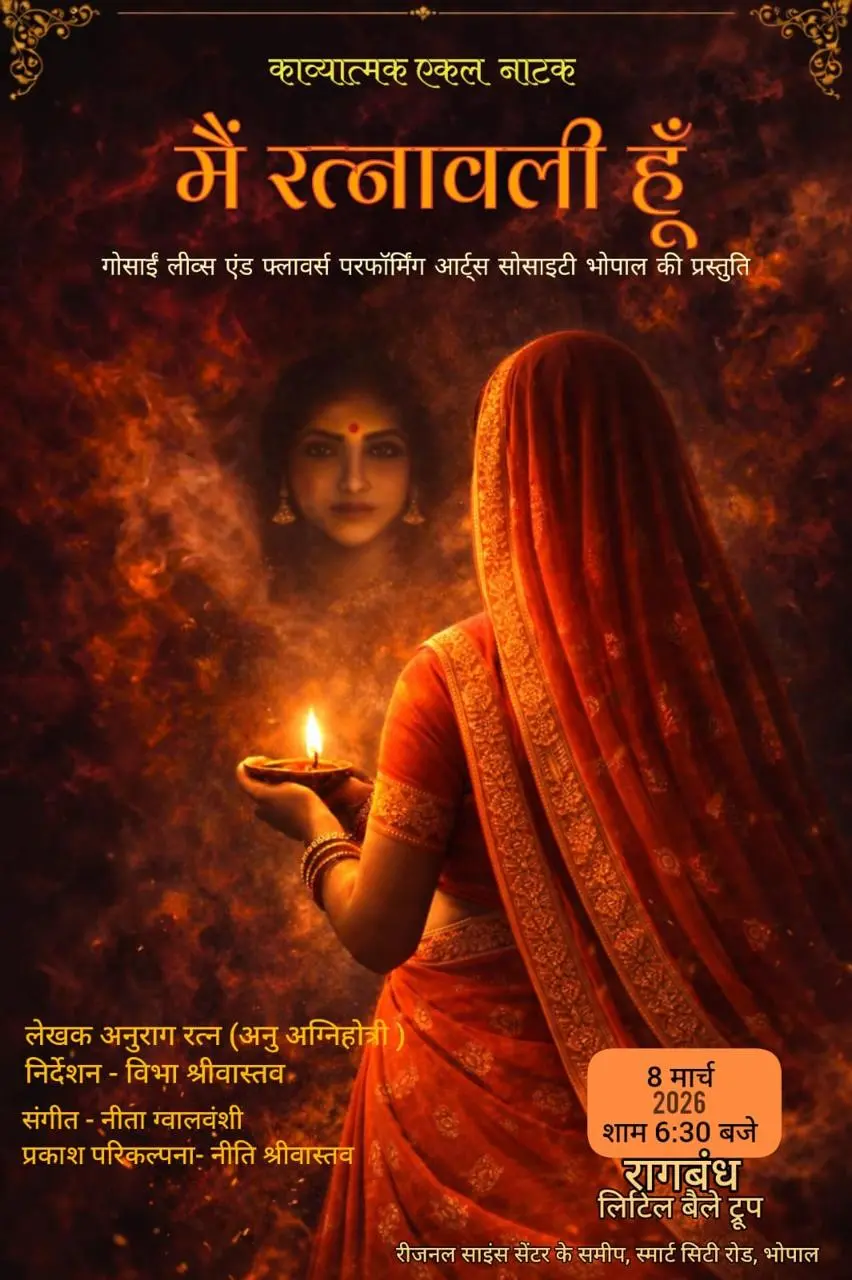
The story of the devoted wife of poet-saint Goswami Tulsidas. When Tulsidas crossed a flooded river out of desperate attachment to reach her, she delivered a profound rebuke that transformed his life.
An evocative theatrical performance exploring distinct thematic elements through nuanced character portrayals.
An Actor Prepares, Building a Character, Creating a Role
He believed that true acting begins not with performance, but with truth. To him, theatre was never about pretending—it was about living honestly within imaginary circumstances. He transformed the world of acting by asking: “What would I do if I were this character?” His work inspired Method Acting, proving the greatest actor is the one who listens, understands, and lives every moment honestly.
Poetics, Concept of Catharsis
The great Greek philosopher analyzed tragedy and explained how drama should be structured to create emotional impact. He introduced the concept of Catharsis, the emotional purification audiences experience through feelings of pity and fear.
Creator of Biomechanics
A pioneering Russian theatre director who rejected naturalistic acting. He created Biomechanics, a physical acting system where the actor’s body became the primary instrument of expression. He trained actors like athletes, mastering balance, rhythm, and precision.
The Theatre and Its Double, The Theatre of Cruelty
A French visionary theatre theorist who developed the Theatre of Cruelty. He believed theatre should shock audiences out of their comfort zones and awaken deep emotional and spiritual awareness, creating sensory experiences that reached beyond logic into the subconscious.
Founder of Epic Theatre, The Threepenny Opera, Mother Courage
Brecht developed the Verfremdungseffekt or “Alienation Effect” to remind viewers they were watching a performance. His goal was social awareness and change, believing theatre should inspire people to question injustice and imagine a better world.
On the Art of the Theatre, Creator of the Über-marionette concept
He believed stage design should express the emotional and symbolic meaning of a play rather than simply imitate reality. His visual innovations permanently changed theatre design.
Creator of the Psychological Gesture Technique
Nephew of Anton Chekhov, he developed an acting technique centered on imagination rather than emotional memory. His method helps actors discover a character’s inner life through expressive physical movement.
Towards a Poor Theatre, Founder of Poor Theatre
He believed theatre did not require elaborate costumes or sets; the most important relationship was between actor and audience. He demanded extraordinary physical discipline, encouraging actors to reveal complete honesty on stage.
The Empty Space, The Mahabharata
Brook rejected unnecessary complexity and focused on clarity and genuine communication. His famous concept of the Empty Space showed that theatre can happen anywhere if an actor and an audience come together.
Theatre of the Oppressed, Creator of Forum Theatre
He transformed audiences into active participants (“Spect-actors”), empowering ordinary people to suggest and perform solutions to social problems and fight injustice.
Author of Nāṭyaśāstra, Creator of the Rasa Theory
The foundational text of Indian theatre. He detailed principles of acting (Abhinaya), stagecraft, music, and the Navarasas (Nine Emotions). He believed theatre is a sacred art that educates, entertains, and uplifts society.
Founder of modern Hindi theatre, Andher Nagari
Celebrated as the Father of Modern Hindi Theatre. He introduced realism and nationalism into Hindi drama, using theatre as a medium for awakening public consciousness against colonial rule.
Skandagupta, Dhruvaswamini
One of India’s greatest Hindi playwrights. His historical dramas blended philosophy, poetry, nationalism, and deep psychological insight, elevating Hindi theatre into a respected literary tradition.
Founder of Third Theatre, Evam Indrajit
Rejecting expensive auditoriums, he brought performances into parks and streets where ordinary people could participate. He used minimal props and direct interaction to create intimate performances that emphasized ideas over spectacle.